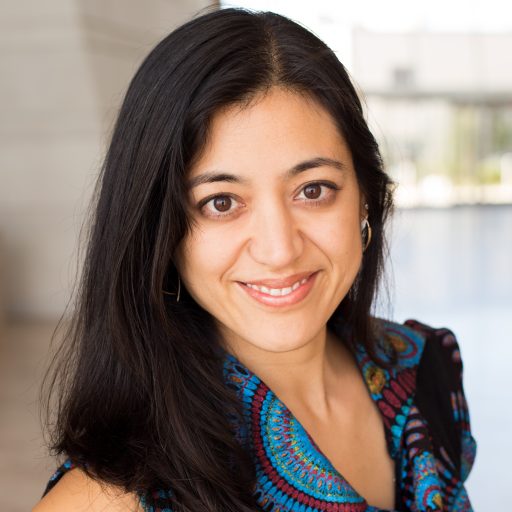
As a scholar, I explore how embodied cultural practices shape and are shaped by politics, history, and society. My research generally attests to the centrality of performance in constituting and destabilizing social spaces, processes, and structures in the transnational Middle East (or SWANA/Southwest Asia and North Africa). I am keen to imagine ways of thinking about, hearing for, and writing in detail about the body that jostle new conversations in and between performance, dance, and sound/music studies.
I am delighted to share that my book, Fraught Balance: The Embodied Politics of Dabke Dance Music in Syria, is available. Please visit the book homepage for more information and the book companion page for suggestions for how to teach it to undergraduate and graduate students.
Here I offer selected articles and essays grouped by subject matter and issue or topic. My work often plays between fields of study, so please read through and around these groupings. Thank you for your interest in my writings!
Embodied Authoritarianism
2021. “The ‘Barbaric’ Dabke: Masculinity, Dance, and Autocracy in Contemporary Syrian Cultural Production.” Journal of Middle East Women’s Studies. 17.2. *Winner of the 2022 Marcia Herndon Article Award by the Gender and Sexualities Section of the Society for Ethnomusicology* *Top Five Most Read Articles in the Journal (2021)*
This article analyzes the construction of masculinity in Syrian political culture. Tracing the deployment of dabke as allegory across selected novels, choreographies, and films, I demonstrate how these symbolic representations of dabke reveal the affective conditions of state violence and carceral spaces in authoritarian Syria. I argue that sovereign and autocratic forms of power are embedded in the gendered structures of the society in which power is performed rather than upholding power as a universal force.
2020. “Mourning the Nightingale’s Song: The Audibility of Networked Performances in Protests and Funerals of the Arab Revolutions.” Performance Matters. 6.2. This article attends to the role of sound in making audible social and political mobilization against authoritarian states. Spanning from the initial social media practices during the Arab revolutions to the protest funerals honoring Syrian revolutionary martyrs in 2018-19, I illustrate how audibility functions as a technological condition, sensory force, and social process that sustains affective publics online. These publics contribute to envisioning, sensing, and perceiving the political possibilities of revolution. By focusing on embodied sonic praxis as live and mediated acts of revolution, the article contributes to the existing literature on sound in protest culture worldwide.
Migration
2023. “’I Dance, I Revolt:’ The Migratory Politics of Syrianness in Mithkal Alzghair’s Displacement (2017).” The Middle East Journal of Culture and Communication. This article details how contemporary Syrian choreography destabilizes liberal European approaches to social difference. I employ choreographic analysis to account for how contemporary dance production reconfigures the complex relations of power and representation situated between Syria and Europe.
2021. “An (Un)Marked Foreigner: Race-Making in Egyptian, Syrian, and German Popular Cultures.” Co-authored with Darci Sprengel. In special issue “Cultural Constructions of Race and Racism in the Middle East and North Africa” of Lateral, edited by Rayya El Zein. In my contribution to this co-authored article, I approach Syrian participation in musical multiculturalism in Germany as a process of racecraft entangled with legacies of empire and contemporary global logics of racialized difference.
2022. “Singing Impassability: Song, Seas, and Syrian Migration.” In Encounters in Ethnomusicology: Essays in Honor of Philip V. Bohlman, edited by Michael A. Figueroa, Jaime Jones, and Timothy Rommen. Berlin: Lit Verlag. This essay dives into the ontological work of song in transcending “impassable” passageways, specifically migration across the Mediterranean in the mid-2010s.
2019. “Syrian Bodies, Sonic Ruptures.” [in]Transition: Journal of Videographic Film & Moving Image, 6.2. I composed this audio-based work using field recordings, popular music, and other sonic materials to imagine the audible subject of “migratory aesthetics” (Mieke Bal).
Neoliberal Politics of Syrian Cultural Production (Music and Dance Sectors)
2016. “The Punk Arab: Demystifying Omar Souleyman’s Techno-Dabke.” Punk Ethnography: Artists and Scholars Listen to Sublime Frequencies. Edited by Michael Veal and E. Tammy Kim. Wesleyan, CT: Wesleyan University Press. This article anticipates the racialized sentiments of the 2015 “European refugee crisis” in its argument that techno-dabke mediates sonic and embodied encounters with Otherness, specifically the racialization of Arab bodies that shape spectatorship at live shows. This piece is an important point of departure for researchers studying alternative Arab music scenes worldwide, which are currently expanding in popularity as artists pursue new directions and broaden audiences.
“Transforming Space: The Production of Contemporary Syrian Art Music.” The Arab Avant-Garde: Music, Politics, Modernity. Edited by Kay Dickinson, Thomas Burkhalter, and Ben Harbert. Wesleyan, CT: Wesleyan University Press. This essay locates the emergence of musical avant-garde aesthetics in both tonal spaces and in the emergence of cultural institutions in the early 21st century. It examines how state-driven neoliberalism in the 2000s influenced the political economy of culture and positioned Syrian artists as transnational subjects who participated in and benefited from the flow of concepts, aesthetics, and capital expedited through neoliberalism.
2015. “Cultural Liberalization or Marginalization? The Cultural Politics of Syrian Folk Dance during Social Market Reform.” In Syria from Reform to Revolt: Culture, Society and Religion. Edited by Leif Stenberg and Christa Salamandra. Syracuse, NY: Syracuse University Press.
Performance as Protest
2019. “On Sirens and Lampposts: Sound, Affect, and Space at the Women’s March,” Music & Politics, Volume XIII, No. 1.
see also 2020. “Mourning the Nightingale’s Song: The Audibility of Networked Performances in Protests and Funerals of the Arab Revolutions.” Performance Matters. 6.2.
2012. “Syria’s Radical Dabke.” In “The Art and Culture of the Arab Revolts,” a special issue of Middle East Report 263 (Summer).
Dabke as a case study in affect theory and performance theory
2019. “Disorienting Sounds: A Sensory Ethnography of Syrian Dance Music.” Remapping Sound Studies, edited by Jim Sykes and Gavin Steingo. Duke University Press. This work proposes “disorientation” as an affective mode of ethnographic research that challenges established notions of bodies, space, and time. By redistributing the senses, it “remaps” the genealogy of sound studies and deprivileges intellectual modes of knowledge production. My conceptualization of “disorientation” extends performance ethnography, a method germane to my home department’s intellectual history, towards sound and other objects of affect theory.
2016. “Public Pleasures: Negotiating Gender and Morality through Syrian Popular Dance.” Islam and Popular Culture, edited by Karin van Nieuwkerk, Martin Stokes, and Mark Levine. University of Texas Press. This work examines how young Muslim women negotiate the embodied politics of pleasure, morality, and dance in public spaces during a period of rising Islamicization in prewar Syria. It resists two prevalent discourses that constrain feminine movement: the Western feminist perspective that views women’s absence from public participation as evidence of patriarchal domination and Islamic repression, and the Arab-Muslim tendency to tether embodied expressions of femininity to pervasive ideals of honor and shame in ways that disempower female agency. I model an approach to gender studies and Islamic studies that centers female and Muslim agency and makes visible the choices women make regarding their participation, or refusal to participate, in embodied practices.

